Most of the decisions in ordering a challenge coin are about the coin itself: the metal, the enamel, the size, the plating. Packaging tends to get chosen in the last thirty seconds, from a dropdown, and that is a mistake, because how a coin is presented changes both how it is received and how much the order costs. A coin handed over in a formal velvet box lands very differently from the same coin dropped into a poly bag, and the price gap between those two choices can quietly rival the cost of the coin. Here is how the common packaging options compare, and how to match one to the job without overspending.
The standard options: poly bags and PVC pouches
At the bottom of the range are the poly bag and the PVC pouch, and for a lot of coins they are exactly right. A clear poly bag is the cheapest option and is usually free; it keeps the coin clean in transit and is fine for a swag-table giveaway where the coin will go straight into a pocket. The soft PVC pouch, which many makers include at no charge, is a genuine step up in feel and protection: it cushions the coin against scratches during shipping and handling and suits a working coin, the kind meant to live in a pocket and come out for a coin check. If your coin is a tool rather than a trophy, the free pouch is not a compromise, it is the correct answer, and spending more on packaging is money that would be better put into the coin.
The middle: velvet bags and acrylic capsules
The first paid upgrade most buyers consider is the velvet drawstring bag, typically the least expensive add-on at roughly sixty cents per coin. It adds a soft, gift-like touch, comes in blue or black, and can hold more than one coin, which makes it a natural choice for a coin given as a small gift or a thank-you. It protects against scuffs but does not lock the coin in place, so it is presentation more than long-term preservation.
For preservation, the acrylic capsule is the workhorse, usually around a dollar a coin. It is a hard two-piece shell that snaps around the coin, holds it still, and shows both faces through clear plastic, which is what you want for a coin that will sit on a desk or shelf for years without the finish dulling or the enamel getting knocked. One sizing note that trips people up: capsules are sold to fit a specific coin diameter, commonly 40 millimeters, so an odd-shaped or die-cut coin may not seat in a standard round capsule and will need a pouch or a custom holder instead.
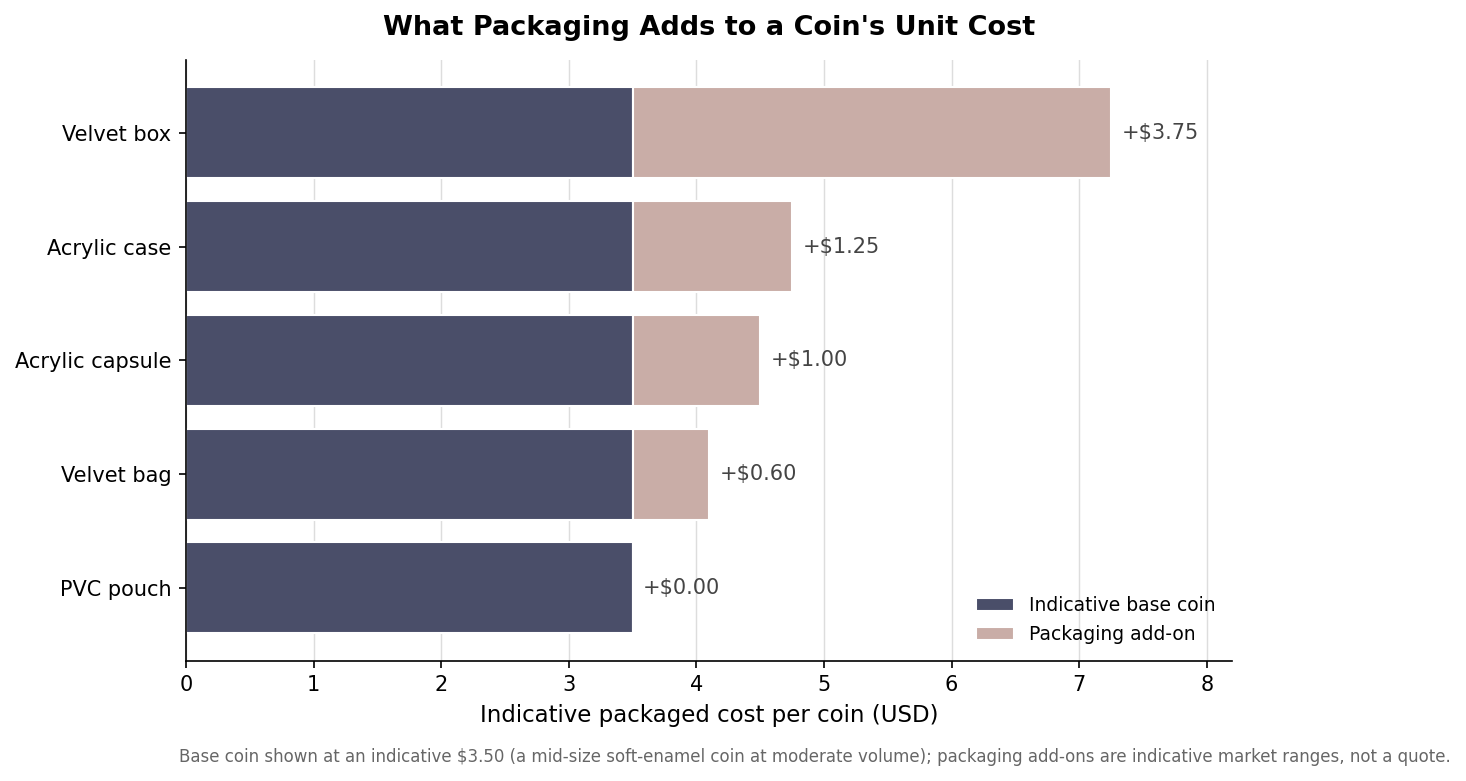
The chart above shows why the middle tier is popular: on a typical coin, a capsule or bag adds a modest amount to the unit cost while meaningfully changing protection and presentation. The jump to the top tier is where the math changes.
The premium tier: presentation cases and velvet boxes
The acrylic presentation case, often the single most popular upgrade at roughly a dollar and a quarter per coin, mounts the coin behind clear acrylic with an easy-remove strap so it can be handled without scratching. It is the standard for recognition and achievement coins that someone will actually display. Above it sits the velvet presentation box, a formal, hinged case that runs several dollars per coin, commonly in the range of three to four dollars. This is the packaging for awards, retirements, and executive gifts, where the moment of opening the box is part of the point and the presentation needs to signal that the coin matters.
Custom printed gift boxes and multi-coin display cases sit alongside these for retail sets and collections, at prices that scale with the printing and construction involved. All of these are legitimate choices; the trap is applying them by reflex. A several-dollar box wrapped around a three-dollar giveaway coin inverts the ratio, spending more on the container than the contents, while the same box around a heavy 3D coin given at a retirement ceremony is entirely appropriate.
Watch how packaging scales with quantity
The reason packaging deserves a real decision rather than a reflex is that it multiplies. An add-on that reads as trivial per coin becomes a serious line item across a full order. The second chart shows the same five options priced out across a 100-coin and a 500-coin run.
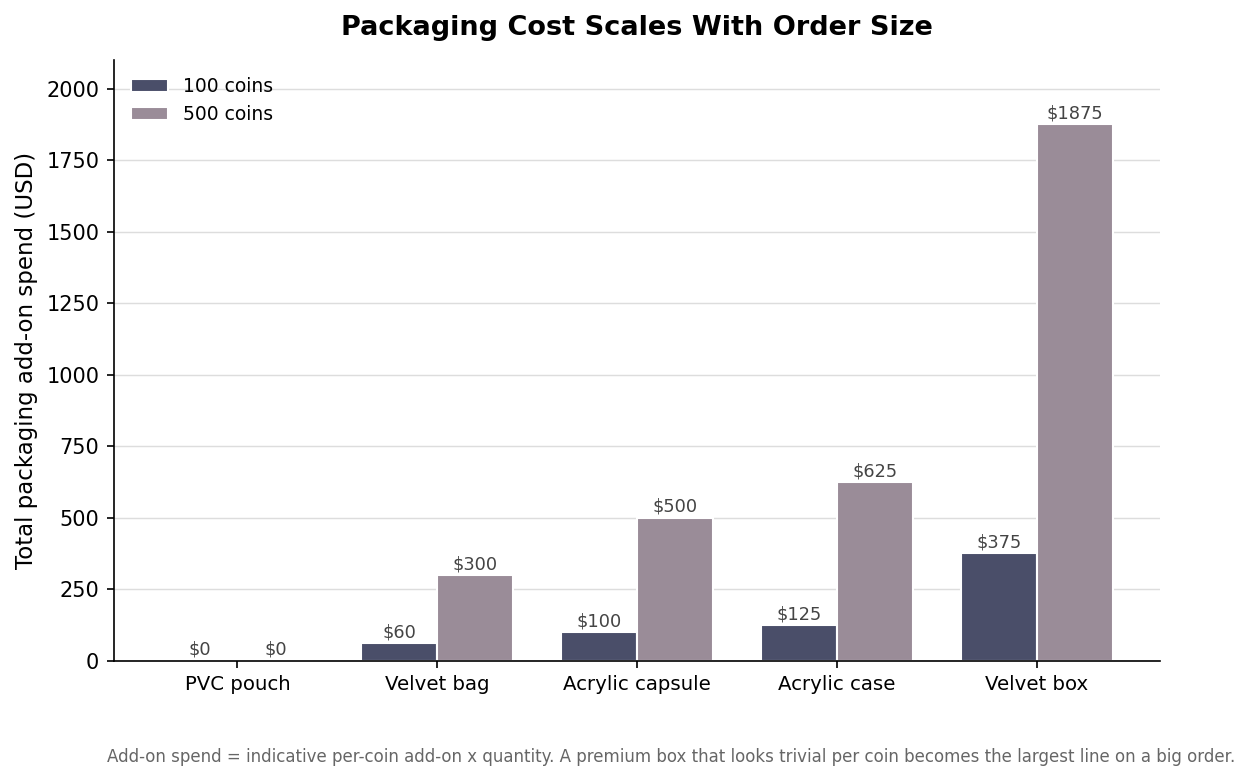
At volume the premium box dominates the packaging budget. Choosing velvet boxes for five hundred coins can add well over a thousand dollars to an order, which may be exactly right for a formal program and clearly wrong for a batch of unit coins. The discipline is to segment: order the bulk of a run in free pouches for everyday handout, and buy a small number of presentation cases or boxes for the coins that will actually be awarded formally. Very few programs need every coin in premium packaging, and splitting the order is usually the smart use of the budget.
Matching packaging to the coin’s job
The clean way to decide is to name the coin’s job first. A working or coin-check coin wants the free PVC pouch and nothing more. A small gift or gesture is well served by a velvet bag. A recognition coin someone will display justifies a capsule or an acrylic case, which protect the finish for years. A formal award or executive gift earns a velvet or printed box, where the presentation is part of the message. Size the capsule or box to the coin’s actual diameter, remember that die-cut shapes may not fit standard holders, and split the order so the premium packaging goes only where it will be seen. Decide packaging deliberately and it reinforces the coin; choose it by reflex and it either cheapens a good coin or inflates the cost of a simple one.
Leave a Reply